
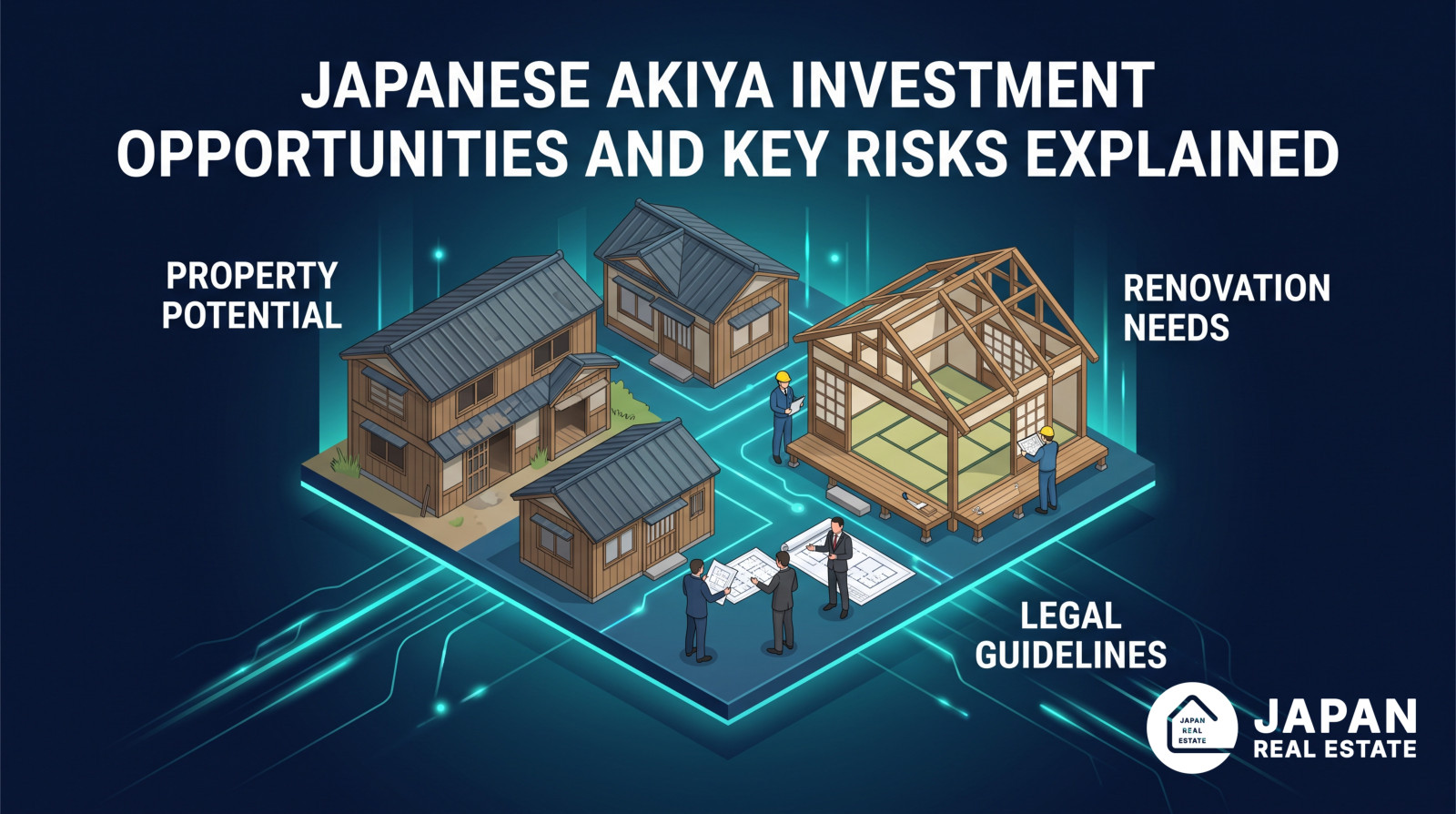
Background of Global Interest in Japan's Akiya (Vacant Houses)
Japan's "Akiya" (vacant houses) have recently become a widely discussed topic among international media and investors. According to the "2018 Housing and Land Survey" released by the Ministry of Internal Affairs and Communications, the number of vacant houses across Japan reached approximately 8.49 million, recording a vacancy rate of 13.6% of all housing. In addition, preliminary findings from the same survey conducted in 2023 (Reiwa 5) show that the number of vacant houses continues to rise, reaching approximately 9 million units.
Behind this trend are structural social changes, including a declining birthrate, an aging population, the concentration of population in major metropolitan areas, and cases where family residences are inherited but left unoccupied. The possibility of acquiring traditional Japanese homes and properties with historical character at accessible acquisition price levels has led many overseas investors to show interest as a new investment opportunity.
If you are searching for properties, please check the Property Listings first to grasp current market trends.
Key Aspects and Investment Opportunities of Akiya Investment
For international investors, revitalizing vacant houses presents opportunities such as the following:
1. Low Acquisition Costs and Operational Flexibility
Compared to high-rise condominiums or newly built properties in major metropolitan areas, vacant houses in regional or suburban areas are sometimes listed at very low price points while including land ownership. When planned around renovation, it is possible to create distinctive value by combining modern living conveniences with the atmosphere of traditional Japanese wooden architecture.
2. Conversion into Accommodation Facilities to Capture Inbound Demand
Around Japanese tourist destinations and natural areas, cases are increasing where traditional houses and large vacant homes are revitalized into whole-building rental accommodations (such as villas or guesthouses). By providing the "experience of traditional Japanese living" sought by inbound travelers, an avenue opens to develop a differentiated accommodation business.
3. Coworking, Retreat Facilities, and Regional Revitalization Projects
With the expansion of remote work, repurposing properties into workation facilities and satellite offices in areas with natural surroundings has also gained attention. Some local governments offer renovation subsidy programs aimed at encouraging relocation and regional revitalization, enabling sustainable projects conducted in cooperation with local communities.
Important Considerations and Risks in Akiya Investment
While vacant house investment holds potential, failing to conduct detailed advance research carries the risk of unforeseen burdens.
1. Seismic Resistance and Structural Issues (Former Seismic Standards)
Japan's Building Standards Act underwent substantial revisions on June 1, 1981, introducing new seismic resistance standards. Properties that received building certification prior to that date were constructed under the "former seismic standards" and may not meet current standards regarding the prevention of collapse during large-scale earthquakes of seismic intensity 6 Upper or higher. Because seismic retrofitting work can require substantial expenses, verifying the date of building certification application is essential.
2. Uncertainty Regarding Repair and Renovation Costs
Wooden houses left unoccupied for long periods may have severe defects such as roof leaks, termite damage, deteriorated plumbing, and foundation settlement. Rather than evaluating the property solely by its exterior appearance, it is important to conduct a home inspection by a qualified architect or professional inspector.
3. The Act on Special Measures Concerning Promotion of Vacant Houses Countermeasures and Tax Burdens
Japan enforces the "Act on Special Measures Concerning Promotion of Vacant Houses Countermeasures," with an amended law taking effect in December 2023. Properties that are notably neglected in management may be designated by municipal governments as "Designated Vacant Houses" or "Inadequately Managed Vacant Houses." Once designated and issued a municipal recommendation, the special tax reduction measure for residential land (which reduces the property tax assessment standard to as low as one-sixth) is revoked, resulting in a substantial increase in the tax burden. Continuously holding an unmanaged property carries an ongoing risk of increased costs.
4. Property Rights and Boundary Confirmation
In properties left without completed inheritance registration, ownership rights may be split among numerous individuals. Furthermore, in older land registries, boundaries with adjacent properties are often not clearly confirmed, which can require significant time for land surveys and boundary verification procedures.
Comparative Steps for Investment Evaluation
To conduct vacant house investments methodically, establishing a systematic advance verification process is necessary.
| Evaluation Item | Key Verification Points | Potential Risk Factors |
|---|---|---|
| Laws & Standards | Building certification after June 1981 (New seismic standards) | Additional expenses arising from seismic retrofitting work |
| Building Condition | Termites, roof leaks, corrosion of water and sewage pipes | Renovation cost expansion due to structural defects not easily visible |
| Zoning & Regulations | Use district (zoning), applicability of the Inns and Hotels Act or the Private Lodging Business Act | Risk that permits for planned accommodation operations cannot be obtained |
| Taxes & Maintenance | Designation under the Vacant Houses Special Measures Act, fixed asset tax reduction status | Tax increases following municipal recommendations, complaints from neighbors |
Conclusion: Collaboration with Local Partners as a Key Factor
The Japanese vacant house (Akiya) market offers opportunities to engage in asset building and cultural revitalization. However, there are numerous points that require careful examination, including statutory regulations, structural seismic capacity, and ongoing maintenance costs. To advance these procedures smoothly while residing overseas, establishing partnerships with professionals well-versed in local legal and tax matters, as well as reliable construction companies and property management firms, is essential.
As a step into the Japanese real estate market, we recommend viewing our latest Property Listings to explore what opportunities exist.